Imagine a Pakistani worker who has built a life in Saudi Arabia. He has a job, a routine, and a future he is working toward. Then one day, without any warning letter or human decision, he is automatically removed from his employer’s records.
His work permit had been expired for months. The system deregistered him automatically, no human intervention required.
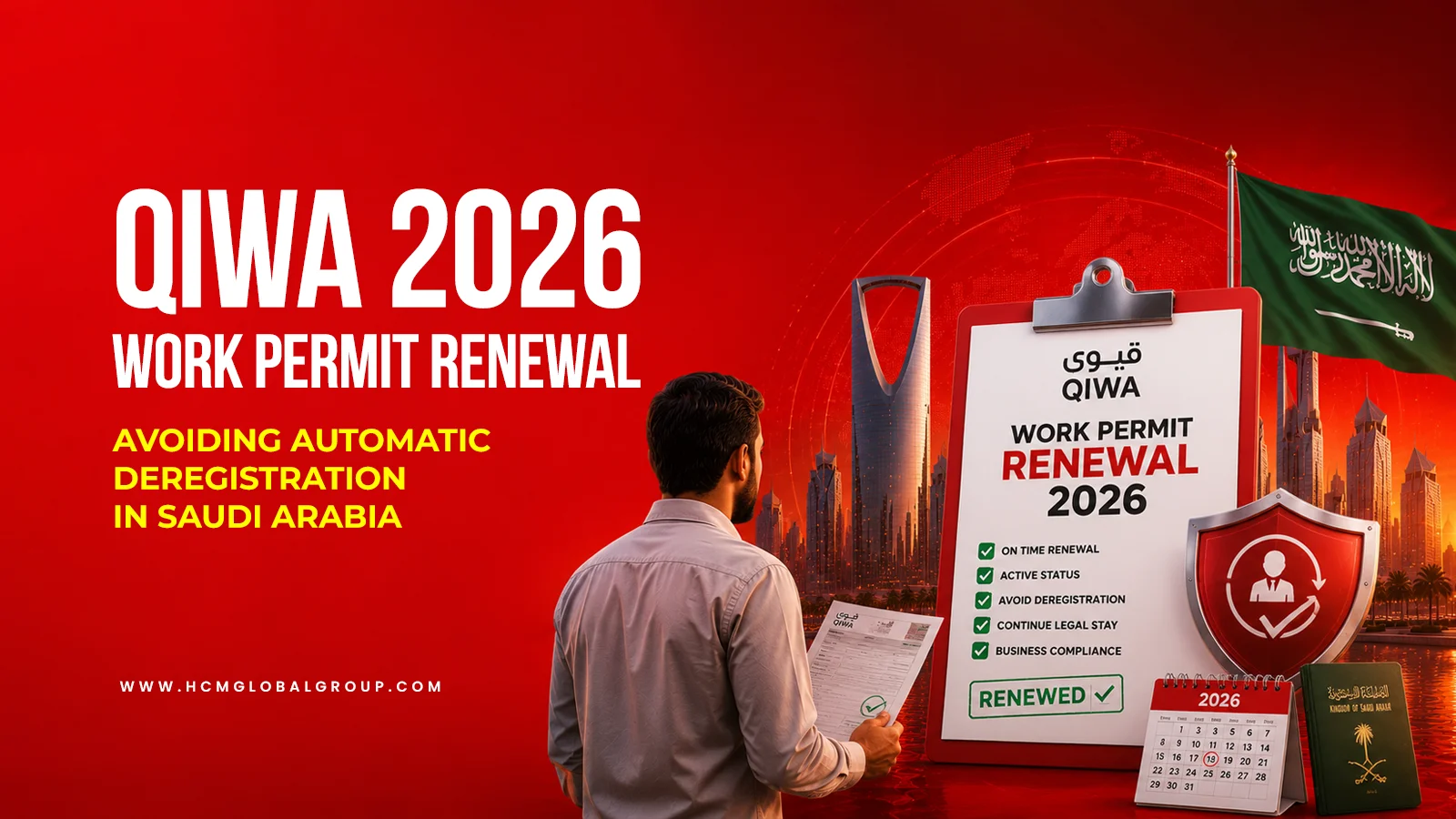
In 2026, this is a real risk for workers whose permits are not renewed on time. Saudi Arabia’s Qiwa platform has introduced automatic deregistration for workers with long-expired permits. For both employers and workers, understanding work permit renewal is now essential.
This affects Pakistani workers directly. If your employer fails to renew your work permit, you could lose your legal standing. If you are an employer, failing to renew permits on time can disrupt your entire operation and leave you with financial obligations.
This complete guide explains Qiwa work permit renewal in 2026: the deadlines, the automatic deregistration rule, what it means for both workers and employers, and how to stay compliant and protected.
What Is a Qiwa Work Permit?
Let us start with the basics. A Qiwa work permit is the official authorization that allows a non-Saudi employee to work legally for an establishment in Saudi Arabia’s private sector.
Qiwa is the electronic platform launched by the Ministry of Human Resources and Social Development, known as MHRSD, to unify Saudi labor market services. It serves two types of users. Qiwa Business is for employers, managing employees, work permits, visas, transfers, and contracts. Qiwa Individuals is for workers, approving contracts, filing complaints, and viewing their career history.
Every non-Saudi employee in the private sector needs a work permit. There is no seniority exception, no remote-work exception, and no grace period beyond the initial 90 days after arrival. This applies to all foreign workers, including Pakistani workers.
Work permits are issued for specific durations, and they must be renewed before they expire. This renewal is where many problems arise, and where the 2026 changes matter most.
The Big Change: Automatic Deregistration in 2026
The most important development for 2026 is the introduction of automatic deregistration for workers with long-expired permits.
Saudi Arabia’s Qiwa platform set a deadline for establishments to renew or correct work permits that had been expired for three months or more. After the deadline, workers whose permits remain expired may be automatically deregistered from the establishment’s record.
Here is what makes this significant. The deregistration is fully electronic, executed through the Qiwa platform without human intervention. There is no case-by-case review, no warning letter, no manual decision. The system simply removes the worker from the active labor roster automatically.
This is a major shift. In the past, enforcement often required manual action. Now, if a permit stays expired past the threshold, the consequence is automatic. This makes timely renewal more critical than ever.
For workers, this means your legal standing with your employer can be removed automatically if your permit lapses. For employers, it means workers can disappear from your active roster without any action on your part, disrupting your operations.
Important: Deregistration Does Not Erase Employer Liability
A crucial point that employers must understand is that automatic deregistration does not extinguish employer liability.
Even after a worker is deregistered, the establishment remains liable for related fees and obligations tied to that worker. In other words, deregistration removes the worker from the active roster, but it does not cancel the accumulated financial obligations.
This means employers cannot treat deregistration as a clean exit. The delayed permit fees, penalties, and other obligations remain. Employers who neglect renewals face both the disruption of losing workers and the burden of outstanding obligations.
For employers, the lesson is clear. Do not let permits lapse assuming deregistration will simply clear the situation. The financial responsibility remains, so proactive renewal is always the better path.
How Work Permit Renewal Works on Qiwa
Understanding the renewal process helps both employers and workers ensure it happens correctly.
The employer issues or renews work permits through the Work Permits service on Qiwa. When renewing, the employer selects the permit duration, which can typically be three, six, or nine months, or one year. The employer then settles the invoice through the MHRSD payment code within the required timeframe.
Choosing the validity period is a genuine decision worth considering. A longer permit means fewer renewals but a larger upfront payment. A shorter permit means more frequent renewals but smaller payments each time. Employers should treat this as a real trade-off rather than a default choice.
Alongside the work permit, employment contracts must be documented on Qiwa, and workers must remain registered with the General Organization for Social Insurance, known as GOSI. These elements work together to keep a worker’s status compliant.
For workers, while the employer handles the renewal, you should monitor your own permit status through Qiwa Individuals. Do not assume your employer has renewed on time. Checking protects you.
The New Premium Residency Work Permit Requirement
Another 2026 change affects Premium Residency holders, and it is worth understanding as part of the broader picture.
Effective from June 2026, individuals holding Premium Residency in Saudi Arabia are now required to obtain a dedicated work permit through Qiwa before commencing employment. Previously, Premium Residency holders could work without a separate work permit.
This dedicated work permit has been reported at a flat fee of around SAR 100, separate from other Premium Residency fees. Employment contracts must still be registered on Qiwa, and GOSI registration remains required.
While most Pakistani workers are on standard employment visas rather than Premium Residency, this change reflects a broader trend. Saudi Arabia is tightening work authorization requirements across the board, ensuring everyone who works has proper permits documented on Qiwa. The direction is clear: proper, documented work authorization for all.
What This Means for Pakistani Workers
For Pakistani workers, these changes have direct implications for your security and livelihood.
Your legal standing depends on a valid permit. If your work permit expires and is not renewed, and it crosses the threshold, you can be automatically deregistered. This removes you from your employer’s active roster and jeopardizes your legal working status.
You cannot rely solely on your employer. While employers are responsible for renewals, the consequences of a lapse fall on you. If your employer is slow, disorganized, or facing financial difficulties, your permit could lapse. Monitoring your own status is your protection.
Deregistration creates a difficult situation. If you are deregistered, resolving your status can be complex. It is far better to prevent a lapse than to fix one.
The good news is that awareness protects you. By understanding these rules and monitoring your own permit status, you can catch problems early and push for timely renewal before any threshold is crossed.
What This Means for Employers
For employers, including those hiring Pakistani workers, the 2026 changes demand proactive workforce management.
You must track every worker’s permit status. With automatic deregistration in place, you cannot afford to let permits lapse. Losing a worker to deregistration disrupts your operations and can affect project delivery.
You remain liable even after deregistration. As explained, the financial obligations do not disappear. Neglect costs you both workers and money.
You need systematic processes. Tracking permits, Iqama dates, and renewal deadlines across a workforce requires organized systems, not last-minute scrambling.
You should act before deadlines, not after. Waiting until a permit is long expired risks deregistration and accumulating fees. Renewing well ahead of expiry is always the safer, cheaper path.
For employers, the message is that workforce compliance is now a continuous, proactive responsibility, not an occasional administrative task.
A Practical Compliance Checklist for Employers
For employers managing a workforce, here is a practical approach to avoiding deregistration problems.
Access your establishment’s Qiwa account regularly, not just when problems arise.
Generate a comprehensive report of all your expatriate workers, showing their work permit and Iqama expiration dates.
Classify workers by urgency, identifying those whose permits are expired or near expiry, and those whose Iqamas are approaching key thresholds.
Calculate any accumulated obligations per worker, including delayed permit fees, penalties, and dependent fees.
Pay outstanding amounts promptly for workers you intend to retain, before any deregistration window.
Open a transfer pathway for workers whose permits cannot be renewed, before the deregistration window closes, so they can move to a new employer legally.
Reconcile job titles across Qiwa, GOSI, and payroll whenever someone is hired, promoted, or reassigned, rather than once a year, to avoid classification mismatches.
Maintain your required Nitaqat Saudization rate, monitoring it from your Qiwa dashboard.
This systematic approach keeps your workforce compliant and protects both your workers and your operations.
The Connection to Job Transfers
An important related point is that when a permit cannot be renewed, a transfer pathway may be the solution.
If an employer cannot or will not renew a worker’s permit, the worker may be able to transfer to a new employer. As covered in guides on Saudi residency, transfers are now possible in 2026 even when an Iqama has expired, provided the new employer pays outstanding fines and initiates the transfer through Qiwa.
This means that a worker facing a lapsing permit is not necessarily trapped. If their current employer will not renew, a new employer can potentially take over their sponsorship through a proper Qiwa transfer.
For workers, this is important to know. A permit problem with one employer does not have to end your Saudi career. A transfer to a compliant employer may be possible. Understanding this option gives you a path forward.
Common Mistakes to Avoid
Mistake 1 (Workers): Assuming your employer always renews on time
Employers can be slow or disorganized, and the consequences fall on you.
How to avoid it: Monitor your own permit status through Qiwa Individuals regularly.
Mistake 2 (Employers): Letting permits lapse assuming deregistration clears everything
Deregistration does not erase your financial obligations.
How to avoid it: Renew proactively and pay obligations for workers you retain.
Mistake 3 (Both): Waiting until permits are long expired
Crossing the expiry threshold risks automatic deregistration.
How to avoid it: Renew well before expiry, never after.
Mistake 4 (Employers): Not reconciling job titles across systems
Mismatched titles across Qiwa, GOSI, and payroll cause compliance problems.
How to avoid it: Reconcile titles whenever a worker is hired, promoted, or reassigned.
Mistake 5 (Workers): Not exploring transfer when a permit cannot be renewed
Some workers give up when an employer will not renew.
How to avoid it: Explore transferring to a compliant new employer through Qiwa.
Frequently Asked Questions (FAQs)
Q: What is a Qiwa work permit?
A: It is the official authorization allowing a non-Saudi employee to work legally for a private-sector establishment in Saudi Arabia. Every foreign worker needs one, and it must be renewed before it expires.
Q: What is automatic deregistration?
A: In 2026, Qiwa introduced automatic deregistration for workers whose permits have been expired for three months or more. The system removes them from the establishment’s active roster electronically, without human intervention or a warning.
Q: Does deregistration cancel the employer’s obligations?
A: No. Automatic deregistration removes the worker from the active roster but does not extinguish the employer’s liability. Establishments remain liable for related fees and obligations tied to deregistered workers.
Q: Who is responsible for renewing my work permit?
A: Your employer handles the renewal through Qiwa Business. However, the consequences of a lapse fall on you, so you should monitor your own status through Qiwa Individuals.
Q: How can I check my work permit status?
A: Log in to Qiwa Individuals to view your employment and permit information. Monitoring your own status protects you from unexpected lapses.
Q: What are the permit duration options?
A: Employers can typically choose permit durations of three, six, or nine months, or one year. This is a trade-off between fewer renewals and smaller upfront payments.
Q: What happens if my permit is deregistered?
A: Deregistration removes you from your employer’s active roster and jeopardizes your legal working status. Resolving it can be complex, which is why preventing a lapse is far better than fixing one.
Q: Can I transfer to a new employer if my permit lapses?
A: Possibly. Transfers are now possible even with an expired Iqama if a new employer pays outstanding fines and initiates the transfer through Qiwa. A permit problem does not necessarily end your Saudi career.
Q: What is the new Premium Residency work permit rule?
A: Since June 2026, Premium Residency holders must obtain a dedicated Qiwa work permit, reported at a flat fee around SAR 100, before working. Previously they could work without a separate permit.
Q: Does this affect standard Pakistani workers?
A: The Premium Residency rule mainly affects that specific group, but the broader trend of stricter, documented work authorization affects all workers. Standard workers should focus on timely permit renewal.
Q: What should employers do to stay compliant?
A: Track all workers’ permit and Iqama dates, renew proactively, pay obligations, reconcile job titles across systems, maintain Nitaqat rates, and open transfer pathways for workers who cannot be renewed.
Q: Where can I verify the current rules and deadlines?
A: Always verify with MHRSD and the Qiwa platform, as deadlines and rules can be updated. Official sources are the most reliable.
How HCM Global Group Helps With Work Permit Compliance
Work permit renewal and compliance can be complex for both workers and employers. HCM Global Group supports both sides.
For workers, our services include:
Status guidance to help you understand and monitor your work permit and Iqama status, so you catch problems early.
Transfer support to guide you through moving to a compliant new employer if your current employer cannot renew your permit.
Documentation help to ensure your records are in order for renewals and transfers.
For employers, our services include:
Workforce compliance guidance to help you track permit and Iqama deadlines and avoid deregistration.
Recruitment support to help you hire qualified Pakistani workers with proper documentation from the start.
Transfer facilitation to help you legally take over the sponsorship of workers seeking to move to your establishment.
Why workers and employers trust HCM Global Group:
We understand the Qiwa system and the 2026 compliance changes. We help workers protect their status and employers protect their operations. We guide both sides through renewals and transfers. We keep everyone informed of the rules that matter.
Note: For specific legal or establishment compliance matters, employers should also consult licensed Saudi legal and PRO specialists.
Key Takeaways
- Every non-Saudi worker in Saudi Arabia’s private sector needs a Qiwa work permit, renewed before it expires.
- In 2026, Qiwa introduced automatic deregistration for permits expired three months or more, executed electronically without warning.
- Deregistration does not erase employer liability. Financial obligations remain even after a worker is removed.
- Workers should monitor their own permit status through Qiwa Individuals, not rely solely on employers.
- Employers must track permit and Iqama dates, renew proactively, and pay obligations to avoid disruption.
- Since June 2026, Premium Residency holders need a dedicated Qiwa work permit, reflecting a broader tightening.
- Workers facing a permit that cannot be renewed may be able to transfer to a compliant employer through Qiwa.
- Always verify current deadlines and rules through MHRSD and Qiwa, as they can change.
Timely work permit renewal is now more important than ever. With automatic deregistration in place, both workers and employers must stay proactive. Monitoring, renewing on time, and understanding your options protect your status, your workforce, and your future in the Kingdom.
Authority Sources
- Saudi Ministry of Human Resources and Social Development: www.hrsd.gov.sa
- Qiwa Official Platform: www.qiwa.sa
- General Organization for Social Insurance (GOSI): www.gosi.gov.sa
- Muqeem Services: www.muqeem.sa