
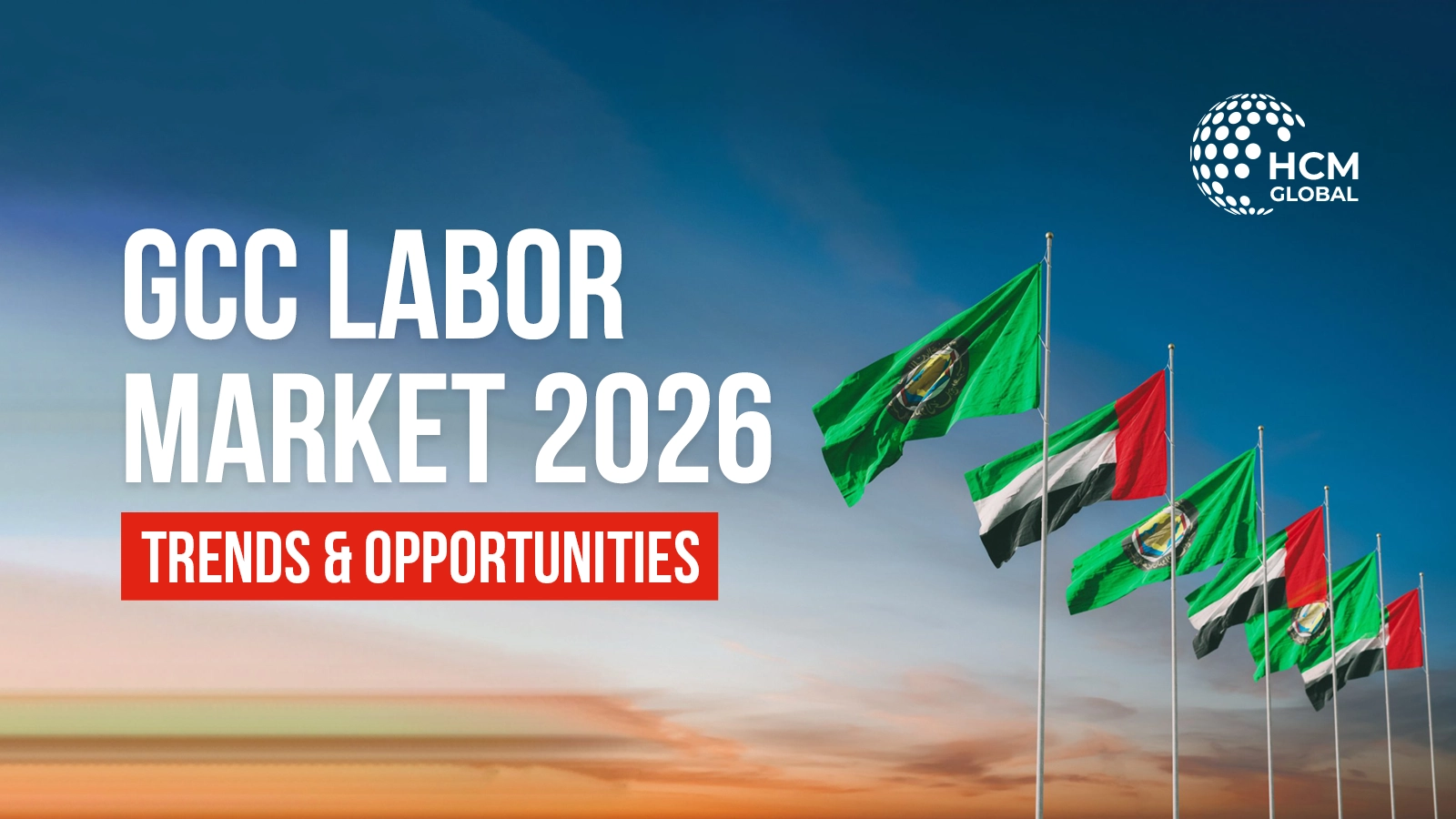
As we move into 2026, the Gulf Cooperation Council (GCC) is no longer just “preparing” for the future—it is actively building it. The visionary frameworks of Saudi Vision 2030 and “We the UAE 2031” have moved from planning to aggressive execution. For businesses, this means the GCC labor market trends in 2026 are defined by one thing: a sophisticated, high-velocity demand for specialized talent.
At HCM Global Group, we are seeing a structural shift in how companies hire, manage, and retain their workforce across Qatar, Saudi Arabia, and the UAE. We prepared a complete guide GCC Labor Market Trends 2026 for you.
1. Beyond the Oil Barrel: The Non-Oil Growth Explosion
The most significant trend this year is the decoupling of the job market from oil price fluctuations. Massive investments in Renewable Energy, Fintech, and Smart Infrastructure are the primary drivers of GDP growth, which is projected to hit 4.4% across the GCC this year.
This diversification has created a “dual-track” demand in the workforce:
- Industrial Powerhouse: A massive surge in blue-collar and technical staffing for mega-projects like NEOM and the expansion of the UAE’s industrial zones.
- Digital Nerve Centers: A 40% rise in leadership and tech roles as GCC countries become global hubs for AI and Cybersecurity.
2. The Rise of “EOR” as a Strategic Market Entry Tool
In 2026, agility is the ultimate competitive advantage. Setting up a local legal entity can be time-consuming, leading many global firms to utilize Employer of Record (EOR) services.
By partnering with a trusted provider like HCM Global, companies can hire talent in Riyadh or Dubai in a matter of days. This model handles the complexities of 2026 labor laws, payroll, and the Wage Protection System (WPS), allowing businesses to focus entirely on their core operations.
3. Localization and Nationalization 2.0
Workforce nationalization (Saudization and Emiratization) has entered a more sophisticated phase. It is no longer just about meeting quotas; it is about Human Capability Development.
Governments are now incentivizing the hiring of nationals in high-value, mid-to-senior management roles. For recruiters, this requires a deep network of local talent who possess both the cultural context and the technical skills to lead international teams.
4. Why AI hasn’t Replaced the Human Touch in Recruitment
Despite the rapid adoption of AI-driven matching platforms, the “Human” in Human Capital Management remains more vital than ever. In the GCC’s high-stakes sectors like Oil & Gas and Executive Search, the ability to vet for cultural fit, soft skills, and leadership potential is something technology cannot automate.
Conclusion: Partnering for Success in 2026
The GCC is currently the world’s most dynamic labor market. Whether you are executing a bulk recruitment drive for an industrial shutdown or searching for a C-suite executive to lead your regional headquarters, the strategy remains the same: Precision over Volume.
As a leader in Staffing and HR Integration, HCM Global Group is uniquely positioned to bridge the gap between global talent and Gulf opportunity.